

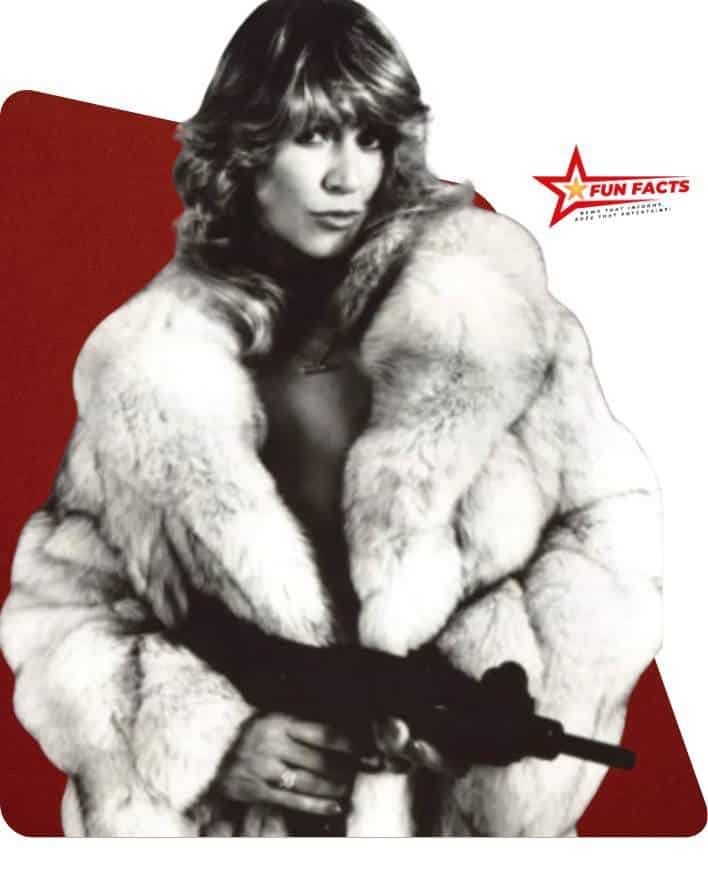
Marilyn Chambers Biography, Death, Husband, Controversy

Marilyn Ann Taylor, also known as Marilyn Chambers, was an American adult actress, exotic dancer, model, actress, and singer. She was known for appearing in various Hollywood films and adult films. She also worked as a theatre artist and lent her voice to various songs.
When and where was she born?
She was born on April 22, 1952, in Providence, Rhode Island, U.S. She grew up in a middle-class family.
Who are her parents and siblings?
Her father worked in the advertising industry, and her mother was a nurse. She had one elder brother named Bill Briggs and an elder sister named Jann Smith.
What were her educational qualifications?
She did her schooling at Burr Farms Elementary School, Hillspoint Elementary School, Long Lots Junior High School, and Staples High School. In 1970, she completed her schooling. She was also voted Best Student Body in school.
Is Marilyn Chambers still alive?
No, Marilyn Chambers passed away in 2009.
How did Marilyn Chambers die? When did she pass away?
On April 12, 2009, Chambers was found dead in her home near Santa Clarita, California. She was found dead at her home in Santa Clarita, California, on April 12, 2009. Her daughter, who was 17 years old at that time, was the first person to discover her dead. According to the LA County Coroner’s autopsy, she died of a cerebral haemorrhage, which was caused by an aneurysm related to heart disease. She died 10 days before her 57th birthday. ((Los Angeles Times))

Here is a list of Top 7 Adult Actors Who Tragically Died Young.
Who is Marilyn Chambers’ daughter (in real life)?
Marilyn Chambers had one daughter, McKenna Taylor, also known as McKenna Marie Taylor. McKenna was born on May 13, 1991, in Riverside, California.
Who is Marilyn Chambers’ daughter in ‘Home and Away’?
In the TV soap Home and Away, Marilyn Chambers (a fictional character in the TV soap) has a daughter named Heather Frazer. The only similarity between the two is the name.
How did she enter the industry?
She started her career as a model. However, her father was against her modelling career. Since childhood, she wanted to become an actor. In an interview, she said,
“Ever since I was a little kid, I’ve always wanted to be an actress. I was always a performer, a junior Olympic diver, a junior Olympic gymnast. My mother always told me I was a show-off.”
What was Marilyn Chambers’ most famous work?
In 1972, she came into the limelight with the adult film Behind the Green Door.
Did Marilyn Chambers ever do mainstream acting?
Yes, she appeared in various Hollywood films. She appeared in David Cronenberg’s Rabid (1977), a mainstream horror film.
Was she involved in politics?
In 2004, she ran for vice presidential elections in the US on the Personal Choice Party ticket, a libertarian political party. She got 946 votes. In 2008, she was Charles Jay’s running mate in the United States presidential election.
Was Marilyn Chambers married?
Marilyn Chambers was married three times. In 1971, she got married to Doug Chapin. She met him in San Francisco. After three years, the couple got divorced. She then married Chuck Traynor. Their marriage lasted for around ten years.
In 1980, she was addicted to heavy drugs and alcohol. At that time, she met William Taylor Jr., a truck driver. Later, they started dating each other. She then joined Narcotics Anonymous to overcome her addictions. In the 1990s, they got married, and together they had a daughter named McKenna Marie Taylor. In 1994, the couple got divorced.
Was she related to any controversy?
Yes, she was linked to controversy during the mid-1980s, primarily connected to her provocative stage performances, which were considered highly controversial by the social and legal standards of that era. These incidents became widely discussed at the time and played a significant role in shaping public perception of her career.
San Francisco Arrest: February 1985
The first major controversy occurred in February 1985 in San Francisco, during her live stage show titled “Feel the Magic” at the O’Farrell Theatre, a venue known for adult entertainment. During the performance, local authorities arrested her on charges related to lewd conduct.
According to police reports, it was alleged that she allowed members of the audience to touch her inappropriately while she was performing on stage.
The arrest drew immediate media attention, as her shows were already considered bold and boundary-pushing. Supporters argued that her performance was artistic expression and consensual entertainment, while critics claimed it crossed legal and moral boundaries. The incident sparked debates around freedom of expression, censorship, and the limits of adult performance art.
Importantly, after legal review and court proceedings, the charges against her were eventually dropped. No conviction was made, and she was released without penalty.
Her legal team maintained that the accusations were exaggerated and that there was insufficient evidence to prove any criminal intent or action beyond performance art. Despite the case being dismissed, the controversy continued to follow her in public discourse.
Cleveland Arrest- December 1985
Later that same year, in December 1985, she was arrested again, this time during a live performance in Cleveland, Ohio. Authorities accused her of having sexual contact with an audience member during the show.
This second arrest intensified scrutiny, with critics arguing that the repeated incidents reflected a pattern of inappropriate conduct.
However, she strongly denied the allegations, stating that she did not engage in any sexual act and that her performance was misinterpreted.
Her defense emphasized that the show was consensual, theatrical, and aligned with the expectations of the venue and audience. She was released on bond, and once again, the case did not result in a conviction.
As with the earlier incident, supporters claimed that the arrest reflected a clash between conservative law enforcement approaches and evolving performance culture in the 1980s. The lack of a guilty verdict reinforced the argument that the charges were difficult to substantiate in court.
Public Reaction and Media Impact
These controversies occurred at a time when society was deeply divided over issues of sexuality, morality, and women’s autonomy, especially in entertainment.
Media coverage often sensationalized the arrests, focusing more on scandal than legal outcomes. While critics labeled her performances as obscene, fans viewed her as bold, fearless, and unapologetic, someone challenging restrictive norms placed on female performers.
Although the legal consequences were minimal due to dropped charges, the reputational impact was significant. The incidents became defining moments in her career, overshadowing her artistic work for many years.
She was frequently referenced in discussions about controversial performers, censorship battles, and the boundaries of adult entertainment.
Long-Term Perspective
In hindsight, many observers view these controversies as reflective of the cultural tensions of the 1980s, rather than clear cases of criminal wrongdoing. The fact that both cases failed to lead to convictions suggests that the legal system ultimately did not find sufficient grounds to punish her actions.
Over time, public attitudes toward performance art, sexuality, and stage expression have evolved. What was once considered scandalous is now often seen as part of broader discussions about artistic freedom and personal agency.
While these controversies remain a notable chapter in her life story, they also highlight how context, culture, and legal interpretation can dramatically shape a public figure’s legacy.
In summary, she was indeed associated with controversy, but it is equally important to note that the allegations did not result in lasting legal penalties, and she consistently denied wrongdoing.
The incidents remain a complex mix of legal, cultural, and media-driven narratives rather than definitive judgments of guilt.